The 2026 Rocky Mountain Section meeting will be held April 17-18, 2026 at Colorado Mesa University in Grand Junction, Co.
Early Bird Registration Deadline: April 3, 2026
Meeting Information
Check back often for updated information
Meeting Schedule
A Preliminary Schedule and Abstract Booklet is now available (final schedule may contain adjustments)
You’re invited on a tour of the Colorado National Monument
Campus Information
Colorado Mesa University is located in Grand Junction, CO. Most of the conference events will take place in second floor of the University Center. Here is an interactive campus map, as well as a pdf campus map (the University Center is building 60).
You can park in any of the commuter parking lots (CP#) on campus. Please do not park in any reserved lots or pay-to-park spaces. Parking is free during both days of the conference (no permit required)! Here is a pdf parking map.
Plenary Speakers
Francis Su, Harvey Mudd College, MAA Pólya Speaker
Audrey Malagon, Senior Director for Programs at the Mathematical Association America, MAA Section Visitor
Hortensia Soto, Colorado State University, MAA Past President
Forest Mannan, Western Colorado University, 2025 Early Career Teaching Award winner
Francis Su - MAA Pólya Speaker
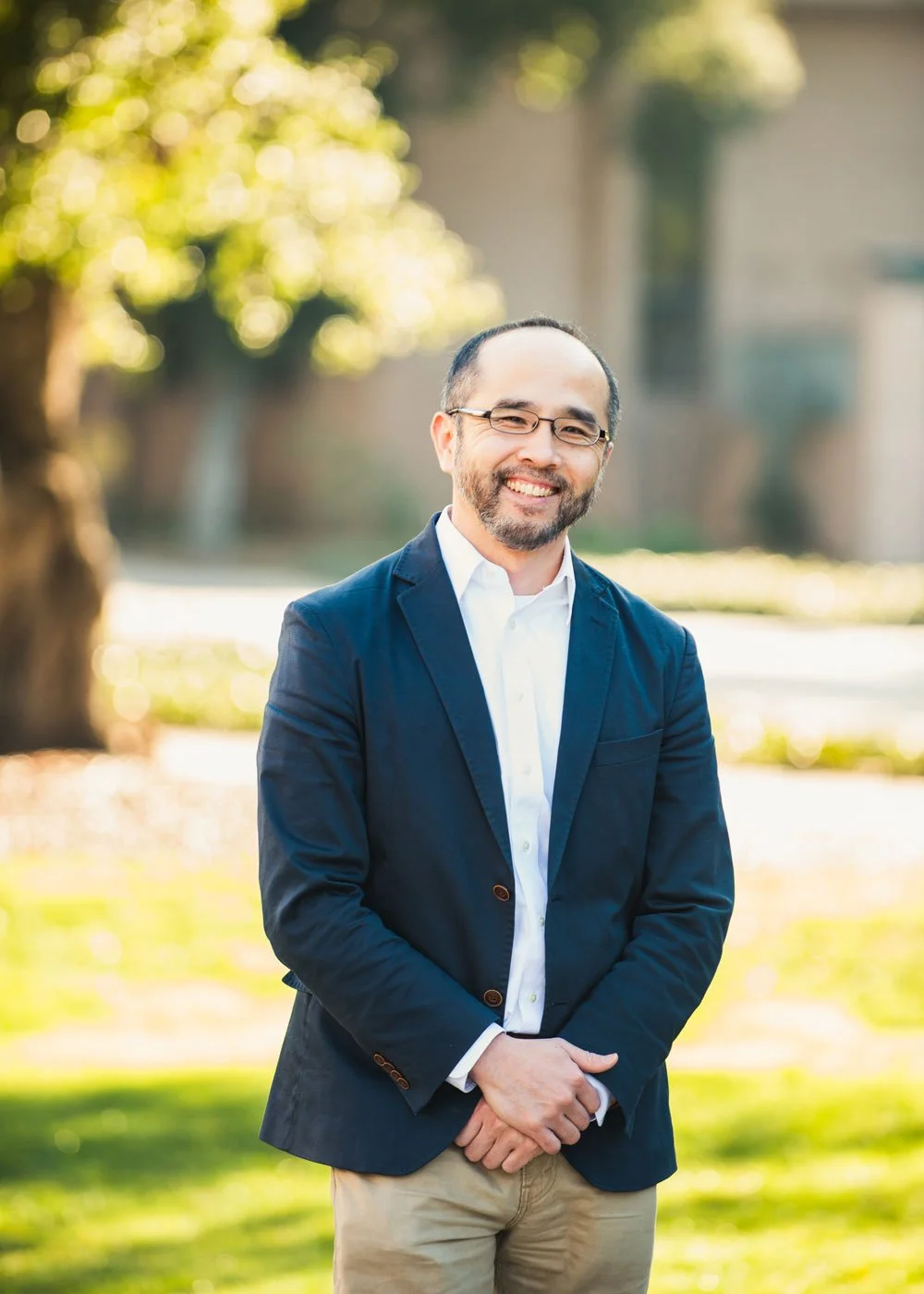
Affiliation: Harvey Mudd College
Bio: Francis Su is the Benediktsson-Karwa Professor of Mathematics at Harvey Mudd College, a former president of the Mathematical Association of America, and a Fellow of the American Mathematical Society. In 2013, he received the Haimo Award, a nationwide teaching prize for college math faculty, and in 2018 he won the Halmos-Ford writing award. His research is in geometric combinatorics and applications to the social sciences. His work has been featured in Quanta Magazine, Wired, and the New York Times. His book Mathematics for Human Flourishing (2020), winner of the 2021 Euler Book Prize, has been translated into 8 languages. It offers an inclusive vision of what math is, who it's for, and why anyone should learn it.
Title of Presentation: Randomness, Geometry, and Privacy
Abstract: Differential Privacy is a relatively new area of computer science that studies ways to protect the privacy of individual data in a database. Since a user like me might be able to discover information about you by asking a database a question that is sufficiently targeted, the privacy of a query answer can be accomplished by injecting a little randomness into it. Such "differentially private" mechanisms have been used by Apple, Google, Uber, and the US Census Bureau. I'll describe how such algorithms work, and then discuss recent efforts to quantify how much randomness is needed to guarantee privacy but still give accurate answers. Surprisingly, this analysis involves the geometry of sets positioned in space in clever ways.
Audrey Malagon - MAA Section Visitor
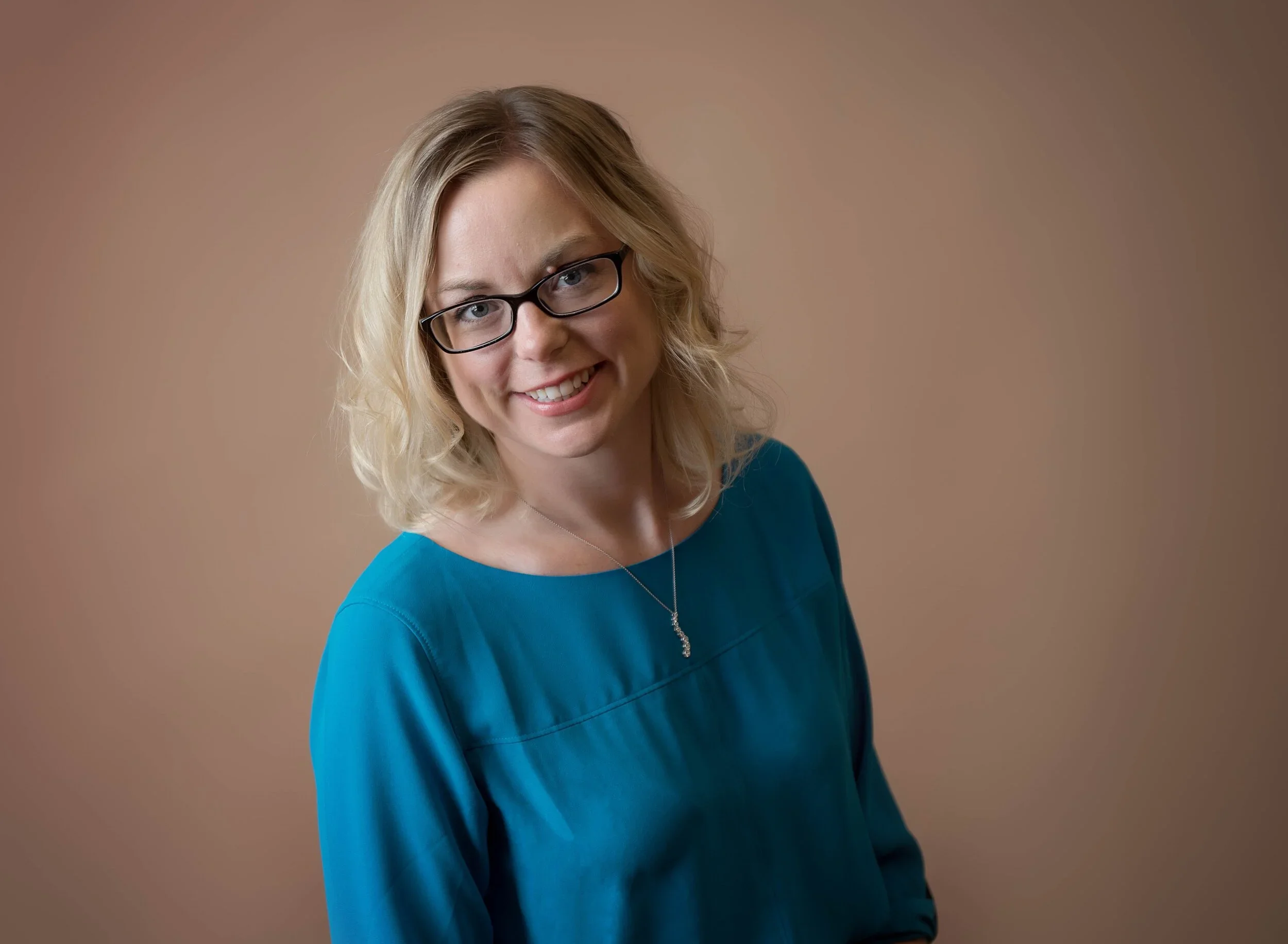
Bio: Audrey Malagon is Senior Director for Programs at the Mathematical Association America where she oversees a range of programs in support of the MAA’s mission to “advance the understanding of mathematics and its impact on our world.” Previously she was Professor and Chair of the Mathematics Department at Virginia Wesleyan University and Chair of Academic Assessment as well as chair of the MAA’s Council on Teaching and Learning. From 2018-2022 she served as mathematical advisor to Verified Voting where she combined her technical expertise and administrative capabilities to advance initiatives, including the passage of the first pre-certification risk-limiting audit legislation in Virginia. At home, she has two stubborn but wonderful children, a husband Mark, and a mouthy husky who bosses us all around. Audrey holds a Ph.D. in mathematics from Emory University.
Title of Presentation: Votes of Confidence: Leveraging Mathematics to Ensure Election Security
Abstract: From investigations into foreign interference to problems with voting equipment, news of election security leaves many questions for our democracy. In this talk, I’ll discuss why voting poses difficult problems and how mathematicians and computer scientists are working alongside political scientists, lawyers, and activists to solve these problems. I’ll share my story and discuss ways we as a mathematical community can contribute to election security in a non-partisan way.
Hortensia Soto – MAA Past President
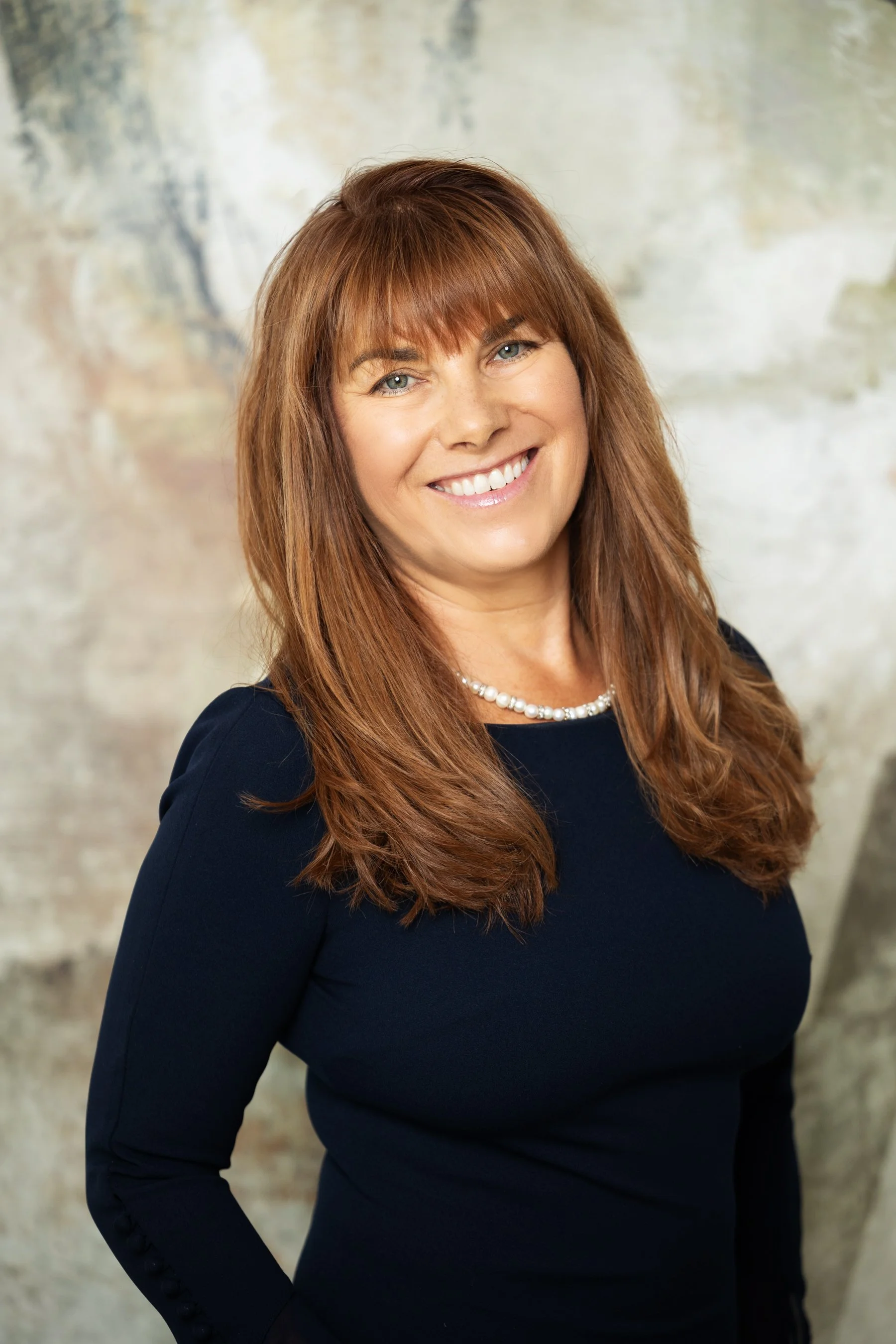
Affiliation: Colorado State University
Bio: Hortensia Soto is a Professor and Graduate Director in the Department of Mathematics at Colorado State University. Her research centers on the teaching and learning of K-16 mathematics where she adopts an embodied cognition perspective. Specifically, she has used this lens in teaching and researching the learning of geometry, linear algebra, abstract algebra, and complex analysis. Hortensia has mentored young women and promoted mathematics via summer outreach programs and frequently facilitates professional development for K-16 teachers. Hortensia is a working member of the Mathematical Association of America (MAA) where she has served as the Associate Treasurer, the Associate Secretary, and as an editor of the MAA Instructional Practices Guide. Currently, she serves as MAA Past President. She is a proud recipient of the MAA Deborah and Franklin Tepper Haimo Award for Distinguished College or University Teaching of Mathematics. In her spare time, Hortensia enjoys hiking, snowshoeing, practicing yoga, meditating, and spending time with her son Miguel.
Title of Presentation: The Shears Know: Creative Assemblage with 3-D Change of Basis Vectors
Abstract: In this presentation I will share on a research project where we explored how undergraduates, enrolled in an introductory linear algebra course, collectively created an assemblage of a shear using 3-D change of basis vectors. For this study, I used a theoretical perspective that falls under the umbrella of embodied cognition–inclusive materialism. This lens posits that learning is the invention of a new creation that manifests through imagination in unusual and unexpected ways. It describes mathematics as an assemblage between the body of participants and the body of their materials that give shape to an activity, where affective and aesthetic features contribute to the virtuality of the body of mathematics. Our findings suggest that the class created an assemblage of a shear by (a) introducing or catalyzing the new and (b) showcasing how aesthetics and affect inspire intra-actions. As part of my presentation, I will describe the students’ intra-actions with their own fabricated material.
Forest Mannan - Early Career Teaching Award
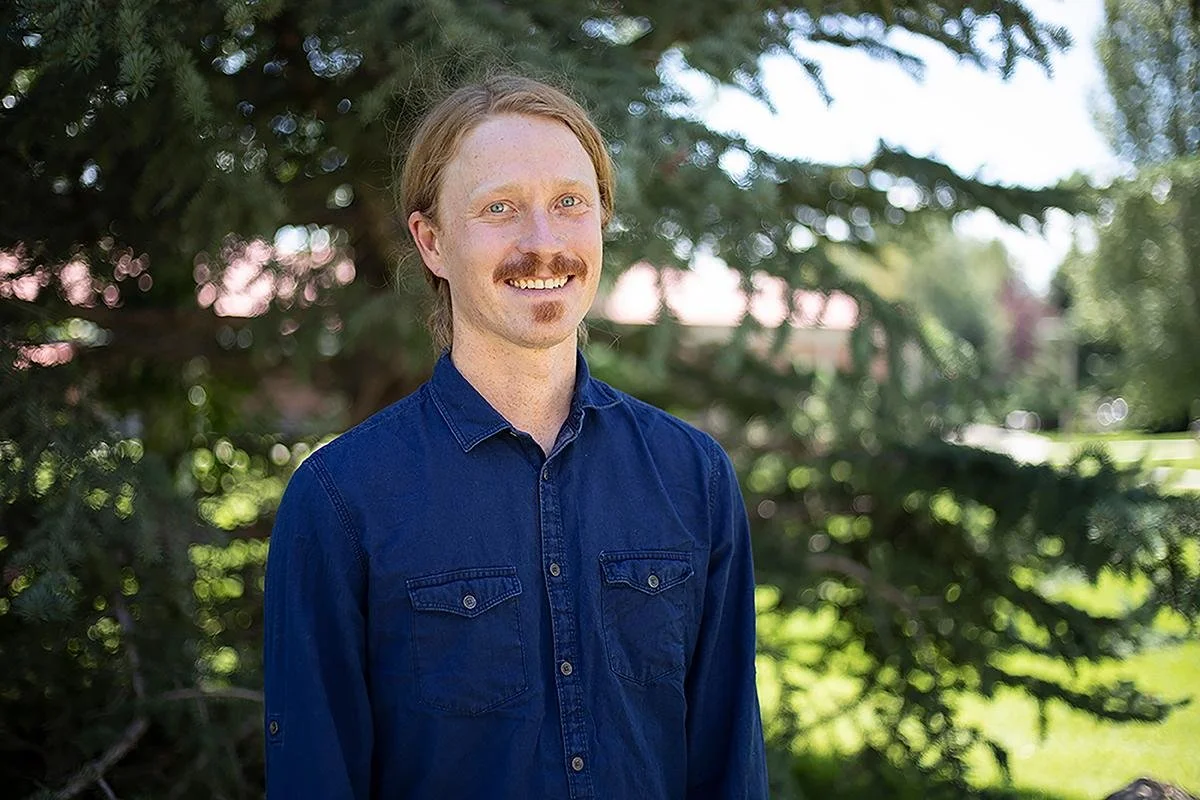
Affiliation: Western Colorado University
Bio: Forest earned a B.A./B.S. dual degree in math and music at the Evergreen State College and received a Ph.D. in Mathematics from Tulane University in 2017. After spending two years as a post doc at Colorado School of Mines, he began teaching at Western Colorado University in 2019 and is currently an Associate Professor. Forest teaches a variety of undergraduate math courses regularly and is devoted to using active learning in the classroom, focusing especially on activities.
Title of Presentation: An Activity Based Talk on Basic Cellular Automata
Abstract: The concept of Cellular Automata (CA) was discovered by Stanislaw Ulam and John von Neumann in the 1940’s while investigating modeling the growth of crystals and self-replicating robots. Since then, CA have been studied more broadly as a particular type of dynamical system with many interesting mathematical properties. This will be an expository talk that introduces CA and combines lecture and an activity to provide an opportunity for guided self exploration of some CA topics.
Pre-Conference Workshops
There will be two pre-conference workshops offered Friday morning, 4/17, from 9:30-11:30am.
Workshop 1
Title: Cultivating Math Learning Leaders: Training, Coaching, and Feedback Models That Work
Description: Effective supplemental math support requires well‑trained, reflective, and motivated staff across all roles that contribute to student learning. This interactive workshop introduces a flexible framework for developing new and returning tutors and for designing effective performance evaluation tools. While grounded in tutoring practices, each component can be readily adapted for instructors and teaching faculty, making the session relevant to a wide range of academic leaders.
In this workshop, we discuss initial tutor training and onboarding as well as how to build an ongoing professional development for new and returning staff that includes leadership opportunities. We also explore performance evaluation practices that incorporate supervisor and peer observations, self‑evaluation, student feedback, and meaningful employee recognition.
Designed for professionals who supervise tutors, instructors, or instructional teams, this session offers adaptable tools for building a cohesive, growth‑oriented math support environment.
Facilitator Bio: Tracii Friedman serves as the Director of the Math Learning Center and Teaching Faculty in the Department of Mathematics at the University of Wisconsin–Madison, a role she began in Fall 2023. She leads a team of four full‑time staff and approximately seventy undergraduate tutors, overseeing initiatives that strengthen the center’s impact on student learning. Her portfolio includes designing a comprehensive tutor training program, creating a leadership framework that prepares experienced tutors to facilitate professional development, and implementing performance evaluation protocols that promote reflective, high‑quality support.
Before joining UW–Madison, Tracii spent 21 years on the faculty at Colorado Mesa University, where she was a full professor for 15 years. During her last few years at CMU, she redesigned and coordinated two first‑year mathematics courses—Quantitative Reasoning and College Algebra—and led professional development for the Quantitative Reasoning instructor team to support consistent, student‑centered teaching practices across sections.
Throughout her career, Tracii has been committed to building inclusive, engaging curriculum and learning environments that elevate student success. At UW–Madison, she has broadened the Math Learning Center’s impact by cultivating intentional, cross-campus partnerships that connect students, instructors, and support units with resources and services that advance student learning and achievement.
Workshop 2
Title: Exploring Desmos from College Algebra to Calculus
Description: Have you heard of Desmos and want to learn more about it? Have you used Desmos and want to expand your knowledge or create new tools for your classroom? Whether you are a novice or a developing Desmos user, this is the workshop for you! We will show you the basics of Desmos, provide some of our favorite Desmos demos we use in our own college algebra, precalculus, and calculus courses, and will also be providing you space and time to create your own Desmos demos and activities that you find useful to your particular courses.
Facilitators: Morgan Sellers and Patrick Snyder (Colorado Mesa University)
Parallel Sessions
Contributed talks are 20 minutes. The rooms will be equipped with whiteboards and an overhead projector with cable to plug your computer into. Questions about the special sessions detailed below should be directed to the listed session organizers.
Designing Accessible Mathematics Classrooms for All Learners
Tayna Camargo (Metropolitan State University of Denver)
This session explores practical and scholarly approaches to making mathematics classrooms inclusive and accessible. We invite presentations that share innovative, scholarly approaches to inclusive mathematics teaching including but not limited to: adaptations of undergraduate or K–12 mathematics tasks for accessibility; use of tactile, auditory, or multimodal resources; empirical studies or classroom-based research on accessibility and learning; curriculum design, assessment, or technology innovations that broaden participation.
History of Mathematics and Its Use in Teaching
Janet Heine Barnett (Colorado State University - Pueblo) and George Heine (Math and Maps)
The use of history in teaching mathematics has a long history in the United States itself, with the Institute for the History of Mathematics and Its Use in Teaching (IHMT) in the 1990’s playing an important role in bringing this highly beneficial pedagogical strategy into the undergraduate classroom. Like the IHMT, this session features topics that range from "pure" history to those that highlight a specific strategy for bringing history into the classroom. The format will consist primarily of 20 minute contributed talks, but may also include a panel or other form of discussion session.
Integrating Generative AI into Mathematics
Rebecca Machen (University of Colorado Boulder)
Generative AI is rapidly transforming mathematics education, raising both opportunities and challenges. This session brings together faculty to share scholarly research, curricular innovations, assessment strategies, and classroom practices for integrating AI into math courses. Presenters will highlight evidence-based approaches that enhance learning, address integrity concerns, and prepare students for an AI-influenced workforce.
Research in Undergraduate Mathematics Education
Morgan Sellers (Colorado Mesa University)
The goals of this session are to promote quality research in undergraduate mathematics education, to disseminate educational studies to the greater mathematics community, and to facilitate the impact of research findings on mathematics pedagogy. Presentations may be based on research in any undergraduate mathematical area. Examples include studies about students' reasoning, teaching practices, curriculum design, and professional development.
Teaching and Learning Mathematics
Shelby Stanhope (US Air Force Academy) and Forest Mannan (Western Colorado University)
This session is open to general topics involving innovative instructional strategies and explorations into students’ mathematical learning. We welcome proposals where speakers share what they have learned from their own experiences. Presentations may include, but are not limited to, practical reforms, successful activities or assignments that support observations about student outcomes with evidence, or that could help instructors reflect on their instructional practices.
General Mathematics Session
Kyle Riley (South Dakota School of Mines and Technology)
Talks not fitting into the sessions above are encouraged. Please submit abstracts to the general mathematics session.
Registration
The fees for this year's meeting are as follows:
$80 MAA member, early registration fee
$90 MAA member, late registration fee
$90 non-MAA member registration fee
$60 Retired, high school teacher, or community college faculty registration fee
$30 Student early registration fee
$35 Student late registration fee
(Dinner on Friday night is included with all registrations!)
We are offering two professional development workshops the morning of Friday, April 17th. The workshops cost $10 to enroll. Workshop details are forthcoming.
Early registration discounts end April 3, 2026, so sign-up today!
Student Events
Students! We will have free pizza available on Friday 11:30-12:45pm in Wubben Science Hall room 112. Come grab some food and meet other mathy students!
We’ll also have an exciting and fun Student Jeopardy game Saturday from 10:30-11:30am. Bring your team or join one when you get here! “Football rivals are nothing compared to mathlete rivals…”
Hotel Information
Discounted lodging rates are available at the following hotels. Rates are valid for Thursday, Friday, and Saturday nights (4/16,17,18). There are a number of other lodging options available in Grand Junction relatively close to campus as well.
-
https://www.thehotelmaverick.com/
Rate: $160 for Thursday night (4/16), $228 for Friday night (4/17), $228 for Saturday night (4/18).
Reservations: Call 970-822-4888 and mention "MAA Conference Block"
Book by: 3/16/26
Note: Hotel Maverick is on the CMU campus and within walking distance of the University Center
-
https://www.hilton.com/en/hotels/gjtcohx-hampton-grand-junction-downtown-historic-main-street/
Rate: $139/night
Reservations: Use reservation link https://group.hamptoninn.com/xwlz7e
Book by: 3/17/26
-
https://www.hilton.com/en/hotels/gjtruru-tru-grand-junction-downtown/
Rate: $139/night
Reservations: Use reservation link https://group.trubyhilton.com/3bo6g9
Book by: 3/17/26
-
Rate: $149/night
Reservations: Use reservation link https://www.marriott.com/event-reservations/reservation-link.mi?id=1758127188782&key=GRP&app=resvlink
Book by: 3/19/26